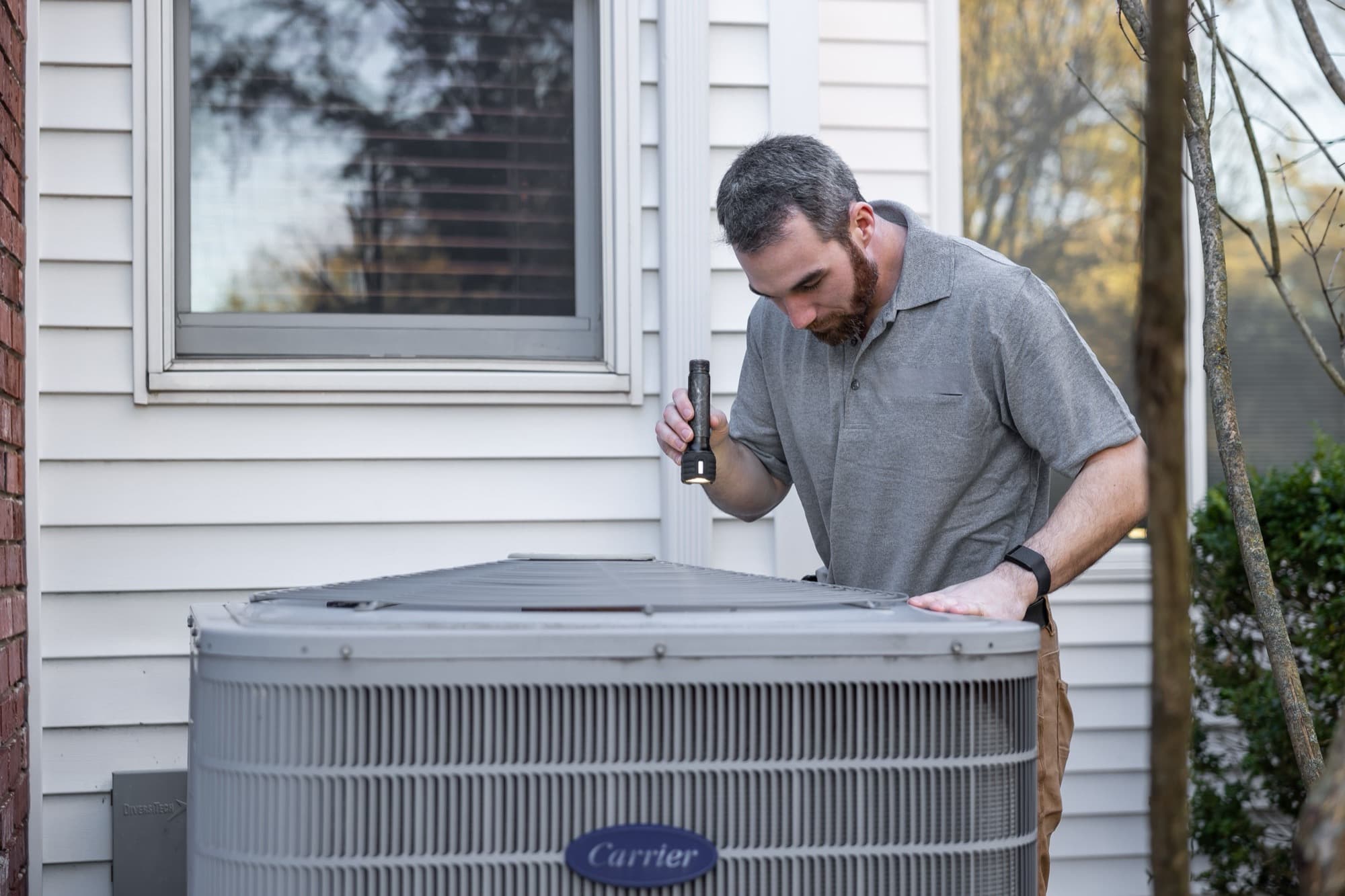
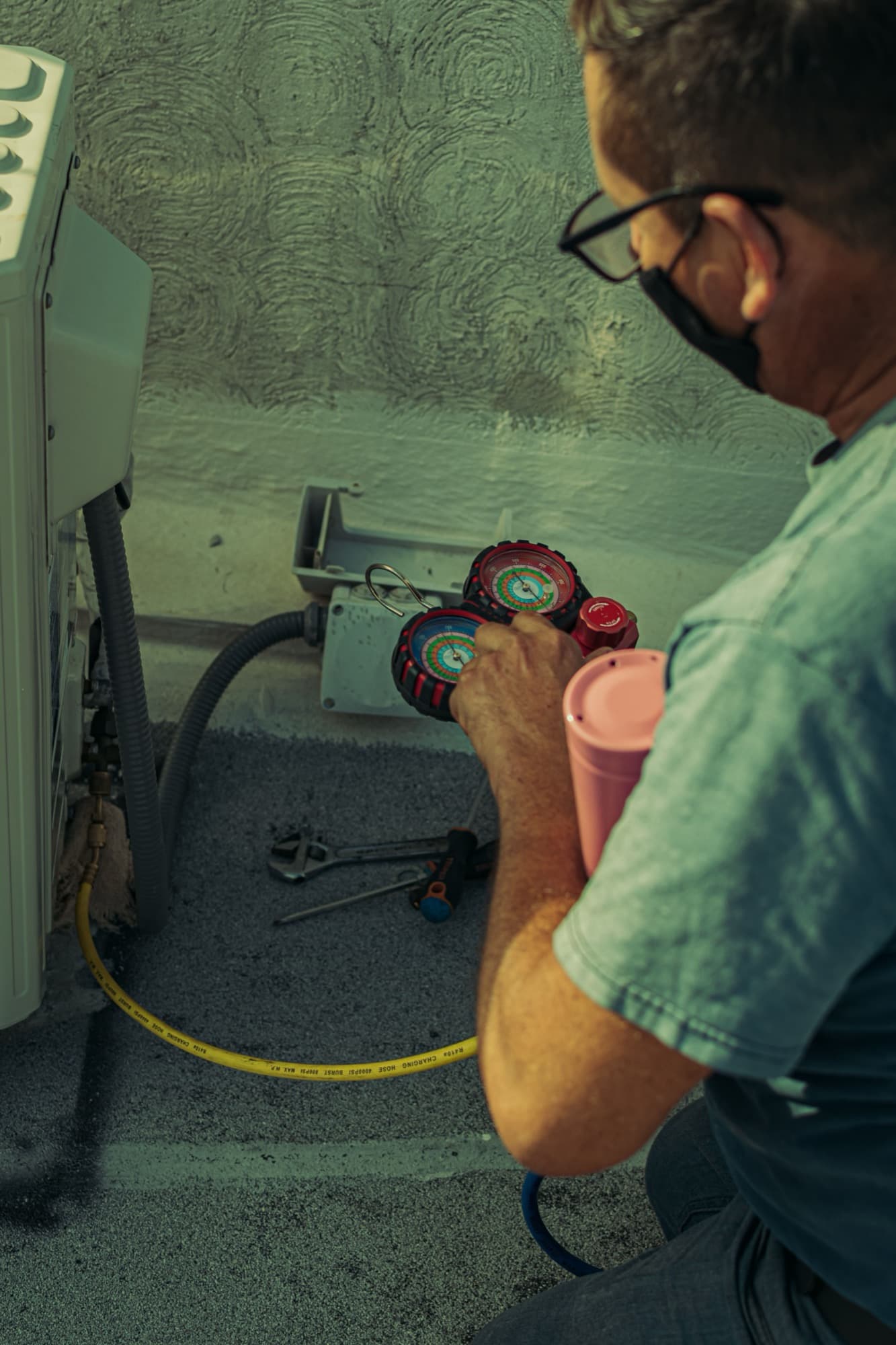
Most furnace no-heat calls are ignition, airflow, or a safety switch doing its job. A dirty flame sensor, a failed igniter, a clogged condensate line on a high-efficiency unit, or a collapsed filter will all shut heat down.
Some failures are not repairs. A cracked heat exchanger is a replacement conversation. Home Ranger Services will show you what we found and will not talk you into a furnace to fix a sensor.
When to call about furnace repair
- 01
No heat, blower may or may not run
The sequence stops at ignition, at the pressure switch, or at a limit. Each stop has a different cause.
- 02
Heat starts, then blows cold
Limit trips and airflow problems are common. So is a thermostat location that satisfies too early.
- 03
Water near a high-efficiency furnace
Those units make condensate. A blocked drain or a bad trap shuts the furnace down.
- 04
A burning smell that does not fade
First-start dust odor can pass. Anything that stays, or any soot, needs a technician before you keep running it.
What the visit includes
- 01
Thermostat call and door switches
- 02
Filter and blower
- 03
Igniter, flame sensor, and gas valve operation
- 04
Pressure switch and inducer
- 05
Condensate drain on high-efficiency models
- 06
Visible heat exchanger and venting
How a visit goes
- STEP 01
Make it fail where we can see it
We run a call for heat and watch where the sequence stops.
- STEP 02
Separate a part from a safety problem
Sensors and igniters are repairs. Heat exchanger and venting problems can mean the furnace should not run.
- STEP 03
Quote before replacing parts
You approve the part and the price. If replacement is the safer spend, you get that number too.
Furnace Repair questions
Dirty flame sensors, failed igniters, tripped limits from a blocked filter, and clogged condensate drains on high-efficiency furnaces. They still need to be diagnosed, because the same symptom can be a worse fault.
Yes. Plenty of Greater Austin homes still have gas furnaces, and dual-fuel systems use both a heat pump and a furnace. We repair the equipment that is in the house.
If you smell gas, see soot, or the unit is overheating, shut it off. If it is simply starting and stopping, leave it off until a technician can watch the sequence rather than resetting it all night.
Related: Furnace Replacement, Heating, Maintenance Plans, Heat Pumps.